Fresh red clay usually comes off concrete with a stiff brush and plain water, or a pressure washer with a surface cleaner. Old clay stains are different: the red color is iron, so you need an iron or rust stain remover, not bleach, soap or more pressure.
If you live around Athens, Watkinsville or Lake Oconee, you know the problem. One hard rain off a landscaping bed or a new construction lot and your driveway has an orange stripe across it. Here’s what actually works, what to skip, and how to keep it from coming back.
1. Why Georgia red clay stains concrete
Georgia clay gets its color from iron oxide. That’s basically rust mixed into the soil. Concrete is porous, like a hard sponge, so when muddy water sits on it, the fine clay and iron soak into the pores. When the water dries, the color stays behind.
That’s why so many homeowners say, “I pressure washed it and it’s still orange.” Pressure moves dirt that’s sitting on top of the concrete. It can’t pull out color that has soaked into the surface. And chlorine bleach, which kills algae and mildew, does nothing to iron.
2. Fresh red mud: let it dry, sweep, then rinse
If the mud just washed onto your driveway, act soon, before it bakes in.
- Let thick mud dry first. Wet clay smears and pushes deeper into the concrete. Once it dries, most of it will sweep or scrape off.
- Sweep and scrape. Use a stiff push broom or a flat shovel to get the loose clay off.
- Rinse and scrub. Wet the area, scrub with a stiff brush, and rinse the dirty water off the concrete and away from the house.
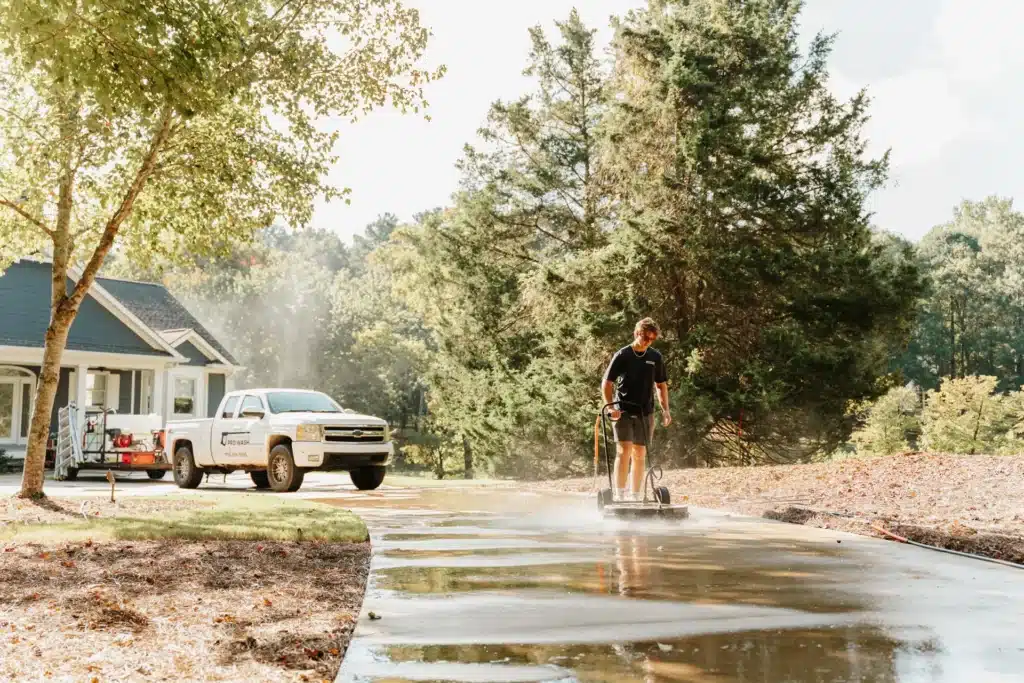
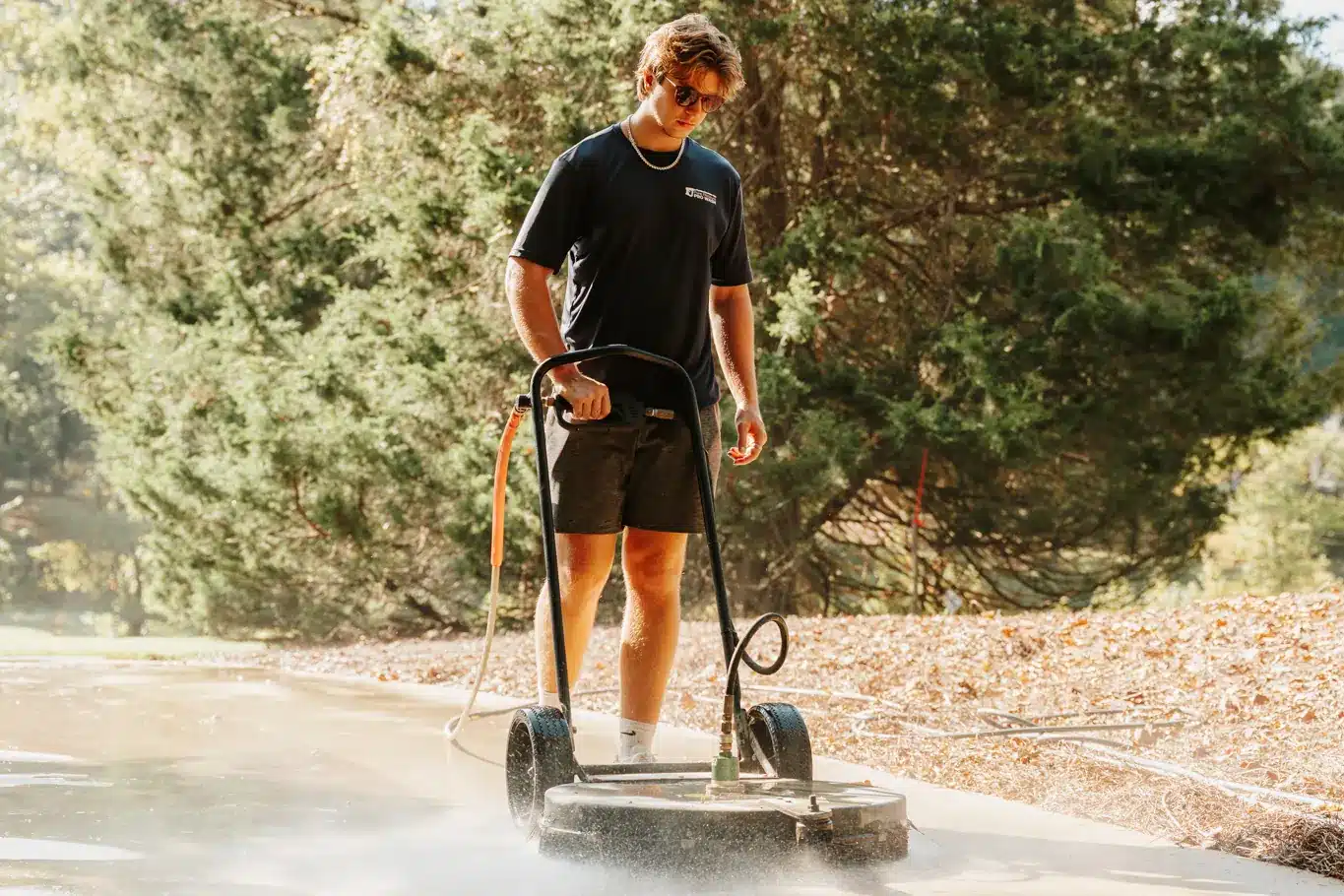
If you use a pressure washer, keep the nozzle moving and don’t hold it close to the surface. A wand held too close leaves stripes, etching and wand marks that you can’t undo. That’s one reason we use a commercial surface cleaner on driveways instead of a wand. It cleans the whole slab evenly.
3. Set-in red clay stains: use an iron stain remover
If the orange is still there after a good wash, it’s in the concrete. To remove it, you need a cleaner made to dissolve iron. Look for a product labeled for red clay, rust or iron stains on concrete. Many of them use oxalic acid, the same ingredient found in a lot of rust removers.
A safe way to use one:
- Read the label and wear gloves and eye protection. These are acids, even the mild ones.
- Test a small spot first, somewhere out of sight, to check how your concrete reacts.
- Wet nearby plants and grass first, then rinse them again when you’re done.
- Apply it to the stain, let it sit for the time on the label, and don’t let it dry on the surface.
- Rinse well. Old, deep stains may take more than one round, and some will lighten rather than disappear.
4. What not to use on red clay
A lot of the advice online makes things worse. Skip these:
- Muriatic acid. You’ll see it recommended in forums. It’s strong enough to eat the top layer of concrete. Use it wrong and you trade an orange stain for a rough, etched, blotchy driveway, and etching can’t be washed out.
- Bleach. Great on mildew. Useless on iron. It won’t touch the red color.
- More pressure. Cranking up the pressure or using a tight tip on a stain doesn’t lift iron. It just scars the concrete around it.
- Dish soap and laundry tricks. They help with greasy dirt, not with clay color that has soaked in.
5. How to keep red clay off your driveway
Cleaning the stain only lasts if you stop the clay from washing back. Walk your driveway after the next heavy rain and look at where the water comes from.
- Cover bare soil. Mulch, pine straw or grass along the edges of the driveway keeps clay from washing onto it.
- Edge your beds. A border along beds that sit higher than the concrete helps hold the soil in.
- Point downspouts away from bare dirt. A downspout dumping onto clay splashes it onto walks and the bottom of your siding.
- Clean it while it’s fresh. The longer clay sits, the deeper it soaks in.

6. When to call a pro
Most red clay stains are a weekend job if you’re patient. It makes sense to call someone when the whole driveway looks dingy, not just one spot, or when you’re also dealing with algae, mildew, dirt and tire marks.
Our concrete cleaning in Athens and concrete cleaning around Lake Oconee starts with a walk-around to look at the stains and the surface. Then we protect nearby plants, clean with a commercial surface cleaner for an even finish, and finish with a pH-neutralizing treatment to protect your landscaping. If red clay has splashed up onto your siding too, our house washing uses a low-pressure soft wash instead of high pressure.
Not sure which method your home needs? Read soft wash vs pressure wash. And if your driveway is also covered in fall leaf stains, see why fall is the time to clean your driveway.
Red clay FAQ
Will red clay permanently stain concrete?
It can. Fresh clay usually washes off. Clay that sits and soaks in can leave a lasting orange tint. An iron stain remover can often take it out or lighten it a lot, but very old stains may not fully go away.
Does bleach remove red clay stains?
No. Bleach kills algae and mildew, but the red in Georgia clay is iron. You need a cleaner made for iron or rust stains.
Can I pressure wash red clay off my driveway?
Yes, if it’s fresh mud. Pressure washing removes clay sitting on top of the concrete. If an orange stain stays after washing, it has soaked in and needs an iron stain remover. Turning up the pressure won’t fix it and can damage the surface.