Yes, you can wash a brick house, but you shouldn’t blast it with high pressure. Brick and the mortar between it are softer than they look, so the safe way is a low-pressure soft wash that lets a cleaning solution kill the growth and a gentle rinse carry it away.
That’s the short answer. Here’s why high pressure causes problems on brick, what actually cleans it, and what to expect when a crew washes your brick home in Athens.
1. Why high pressure and brick don’t mix
Brick looks tough. It’s a wall made of fired clay, after all. But brick is porous, and the mortar joints holding it together are softer than the brick itself. Point a narrow, high-pressure stream at a wall and the mortar is usually the first thing to go. You can wear away the joints, chip the face of older bricks, and leave stripes where the wand passed.
High pressure can also push water deep into the wall. On a house, that means water forced into gaps around windows, trim, vents and weep holes. Our house washing page says it plainly: high-pressure washing on a home can force water behind exterior walls, strip paint and crack trim. Brick is no exception.
Painted brick is even touchier. Hit it with high pressure and you can lift the paint right off.
2. What’s actually on your brick
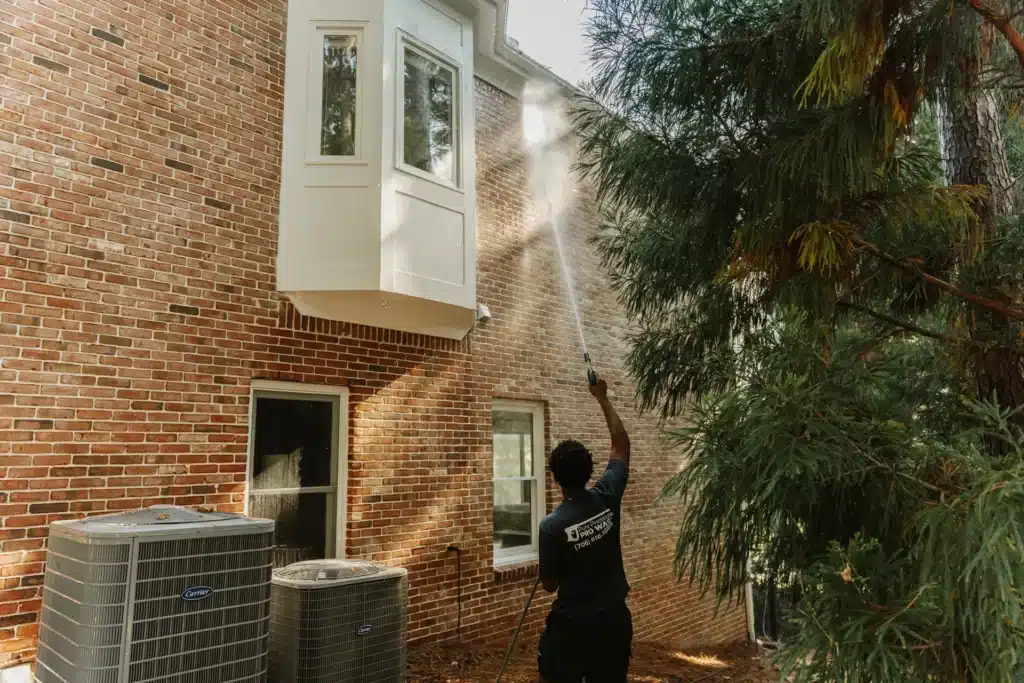
Most of the dirt on Athens brick homes isn’t dirt at all. It’s living growth. Warm summers, high humidity and lots of shade from big trees make a perfect spot for algae, mold and mildew. That’s why the shady side of the house, the walls under trees and the area behind the AC units often turn green or black first.
Spraying harder doesn’t fix that. Pressure knocks off the top layer, but the growth that’s down in the pores of the brick and mortar stays alive and comes right back. A cleaning solution kills it where it lives.
You may also see a white, chalky haze on some brick. That’s usually efflorescence, which is mineral salts coming out of the masonry as moisture moves through it. We cover it, along with the green and black stuff, in why Athens homes get green and black stains every year.
3. How we soft wash a brick house
Soft washing is low pressure by design. The solution does the work, not the force of the water. Here’s how a house washing visit goes:
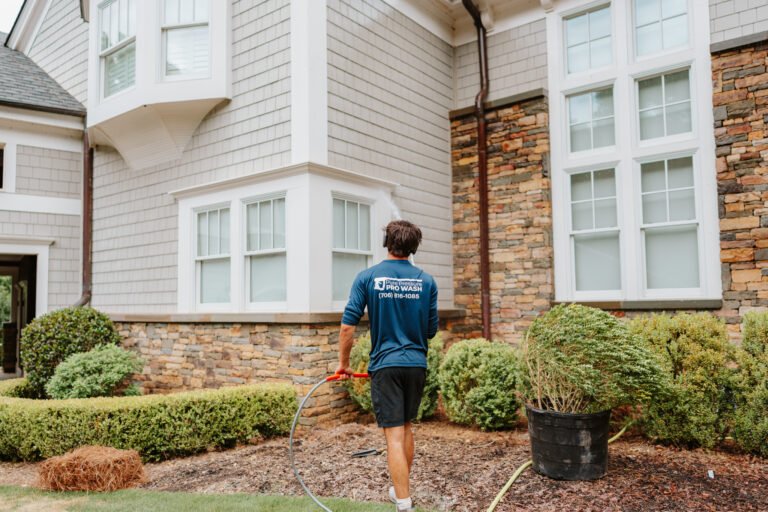
- Protect the plants first. Shrubs, flower beds and grass near the house get pre-treated and protected before any solution goes on.
- Apply the solution at low pressure. It goes on the brick, trim and soffits to kill algae, mold and mildew at the source.
- Rinse everything. Every treated surface gets a thorough rinse, and the landscaping gets rinsed again too.
- Walk it with you. We finish with a final inspection to make sure every area looks right.
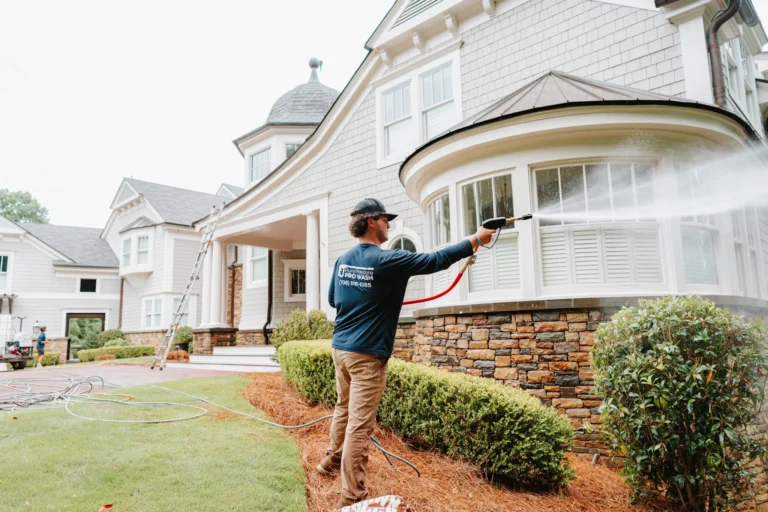
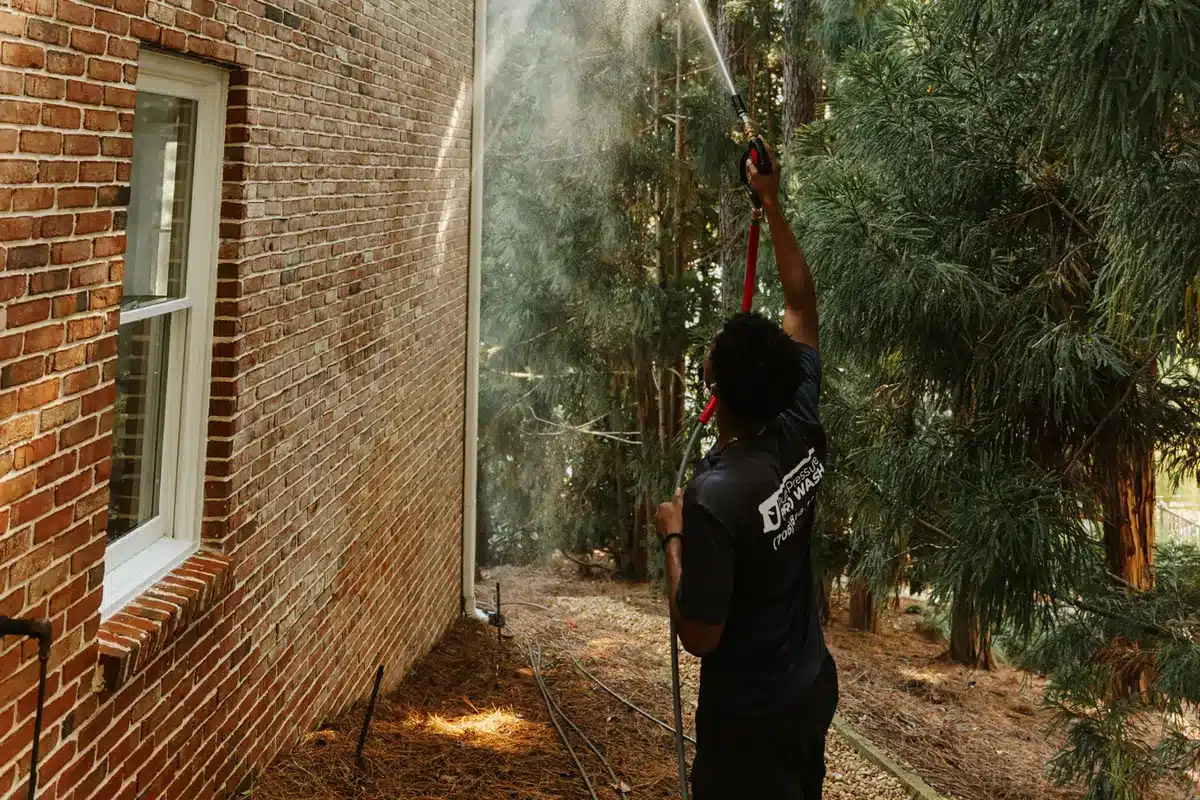
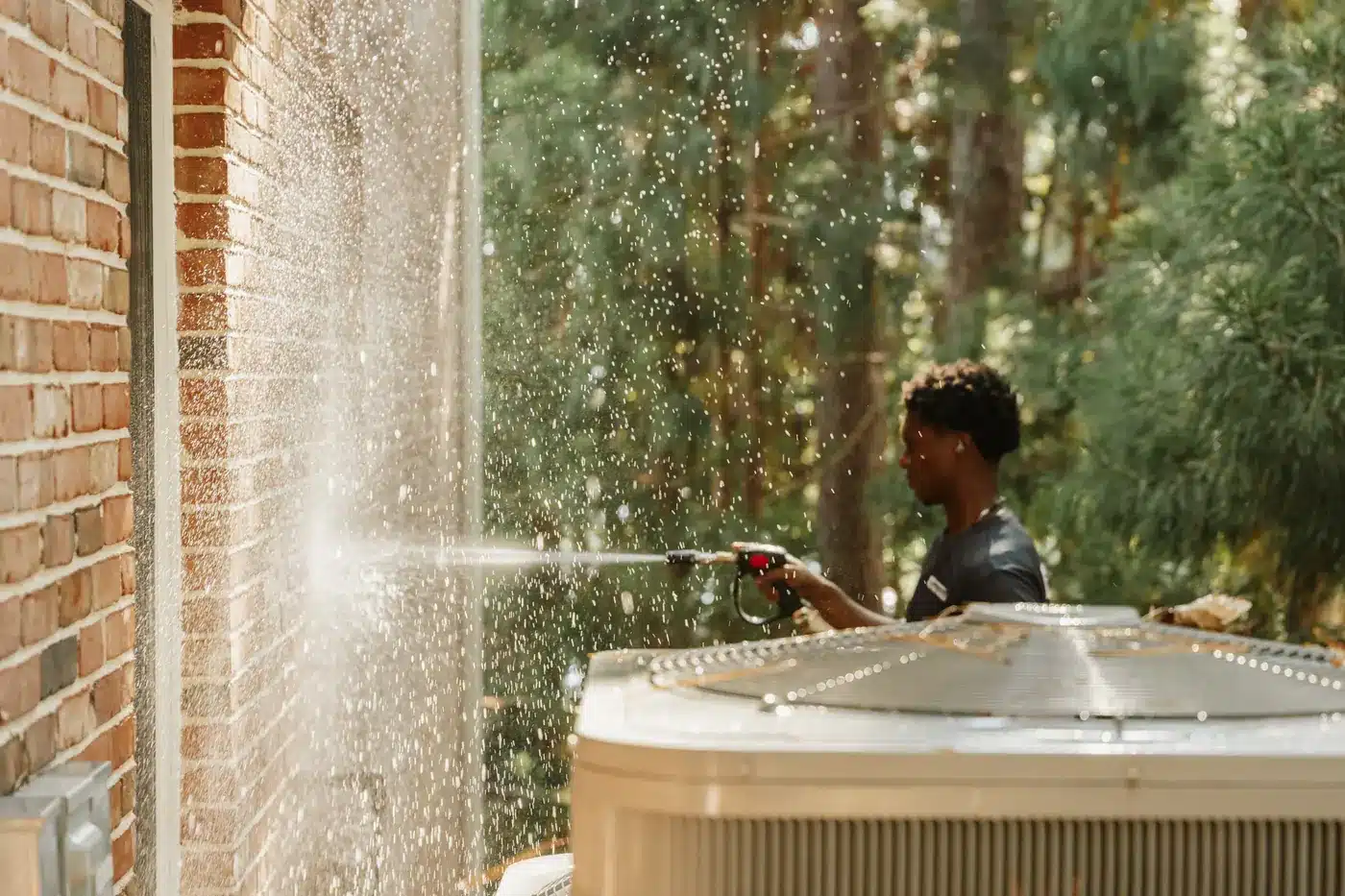
The long spray you see in our photos is how we reach the second story without a ladder and without high pressure on the wall.
4. Can you do it yourself?
You can, if you’re careful. The usual DIY mistake is grabbing a pressure washer, picking the tightest nozzle and getting close to the wall. That’s how mortar joints get damaged.
If you’re doing it yourself:
- Start low. Use the widest tip and the lowest setting, and keep your distance from the wall.
- Never aim straight into joints, windows or vents. Spray at an angle, top to bottom.
- Check for cracks first. Loose or crumbling mortar should be repaired before any washing.
- Protect your plants. Soak beds before using any cleaner and rinse them after.
- Stay off ladders with a pressure washer. The kickback can throw you off balance.
If the job means second-story walls, heavy growth or older brick, it’s usually worth having a crew do it.
5. Brick around the house: chimneys, walls and walkways
The same idea applies to brick chimneys, garden walls and brick steps. Go gentle on anything vertical and anything with mortar. If the growth is on your shingles too, read about black streaks on your roof. For flat concrete like driveways and sidewalks, we use a surface cleaner instead. See our concrete cleaning service for that.
6. How often should a brick house be washed?
Most homes do well with a professional house wash every 1 to 2 years. Homes with lots of tree cover, shade or a north-facing wall that stays damp may need it closer to once a year. If you’d rather not think about it, we also offer scheduled maintenance plans.
You often don’t need to be home, either. As long as we can get to the work areas and a water spigot, we can usually finish while you’re out. If you’re worried about your yard, here’s how we keep soft washing from hurting your plants.
Frequently asked questions
Is pressure washing bad for brick?
High pressure can be. It can wear away mortar, chip older bricks and push water into the wall. Low-pressure soft washing cleans brick without those risks.
What is the best way to clean a brick house?
A soft wash: a cleaning solution applied at low pressure to kill algae, mold and mildew, then a thorough rinse. The plants around the house get protected before and after.
Can you pressure wash painted brick?
Not with high pressure. It can strip the paint. Painted brick should be soft washed.
Get your brick home washed the safe way
We soft wash brick homes all around Athens, Watkinsville, Bogart, Bishop and Jefferson, and at Lake Oconee too. Send us your address and we’ll send you a straight number.