Soft washing uses low pressure and a cleaning solution to kill algae, mold and mildew. Pressure washing uses high-pressure water to blast dirt off hard surfaces. For most homes, the answer is both: soft wash the siding and roof, pressure wash the driveway and sidewalks.
The trick is knowing which surface gets which. Use the wrong one and you can strip paint, ruin shingles or leave the stains to grow right back. Here’s how to tell the difference.
1. What is soft washing?
Soft washing is a low-pressure way to clean a house or roof. Instead of using force, it uses a cleaning solution that soaks into the green and black growth and kills it at the root. Then everything gets a gentle rinse.
The key idea: the solution does the work, not the water pressure. That matters because the stains on Georgia siding and roofs aren’t just dirt. They’re living algae, mold and mildew. If you only knock the top layer off, the roots stay behind and the stains come back fast.
Soft washing is the right choice for:
- Vinyl siding
- Painted wood, trim and shutters
- Stucco
- Asphalt shingle roofs
- Screened porches, soffits and gutters
2. What is pressure washing?
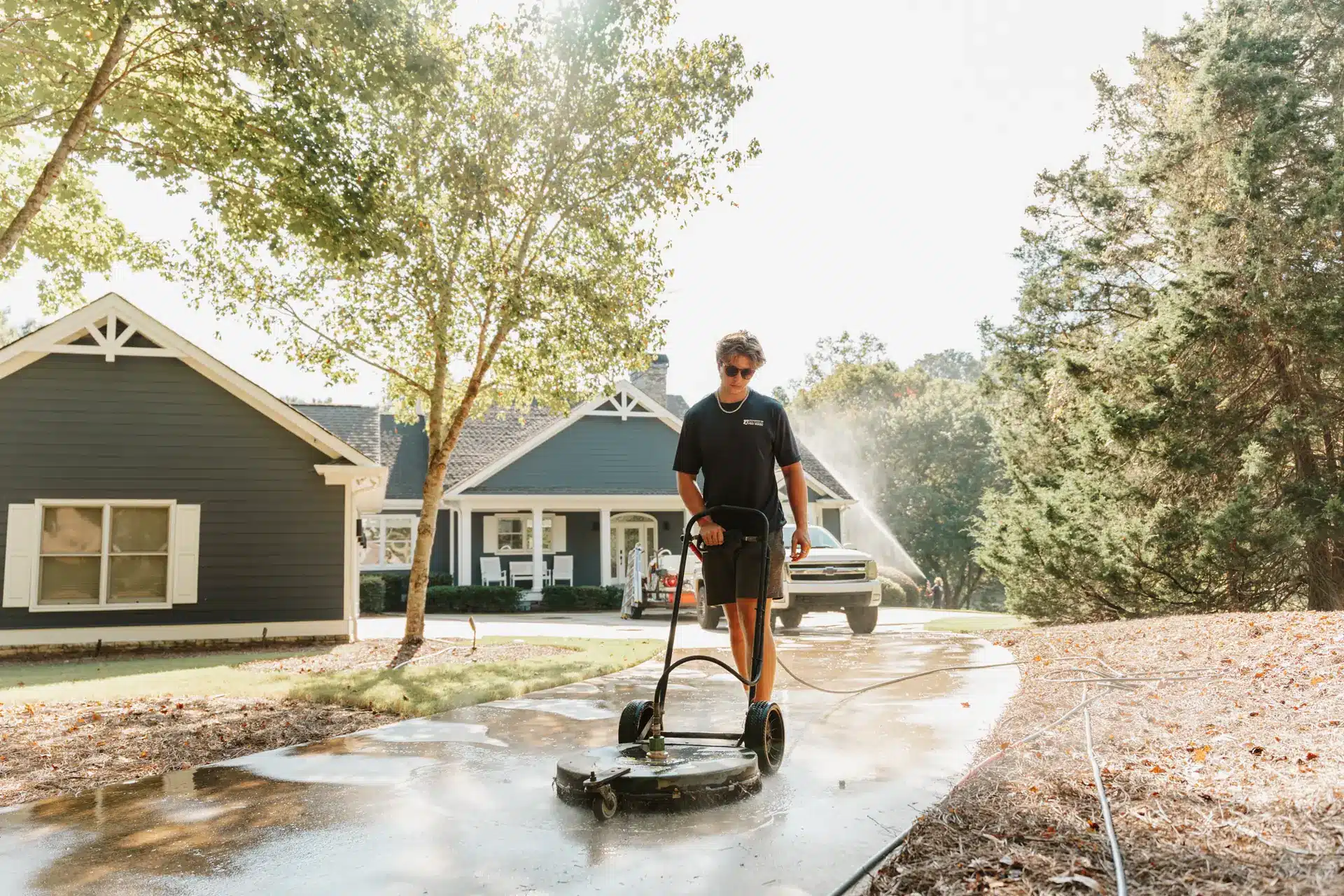
Pressure washing uses water at high pressure to strip away dirt, grime and stains. It’s great on hard, tough surfaces that can take the force. On concrete, we use a commercial surface cleaner, a round machine that spins the spray in an even circle. That cleans the whole slab evenly and avoids the stripes and wand marks you get from a handheld wand.
Pressure washing is the right choice for:
- Concrete driveways
- Sidewalks and walkways
- Concrete patios and pool decks
- Entryways and steps
3. Why you shouldn’t pressure wash your house
A lot of homeowners think more pressure means a better clean. On a house, it doesn’t. High pressure on siding can force water behind the walls, strip paint, crack trim and wear out your siding sooner. Older vinyl and wood siding, which you see all over Athens, is even easier to damage.
High pressure also misses the real problem. It can make a wall look clean for a while, but if the mildew isn’t killed, it grows back. That’s why our house washing in Athens uses a soft wash system made for home exteriors.
Brick is a special case. It’s tougher than vinyl, but the mortar between the bricks isn’t. We cover that in can you pressure wash a brick house.
4. Never pressure wash a roof
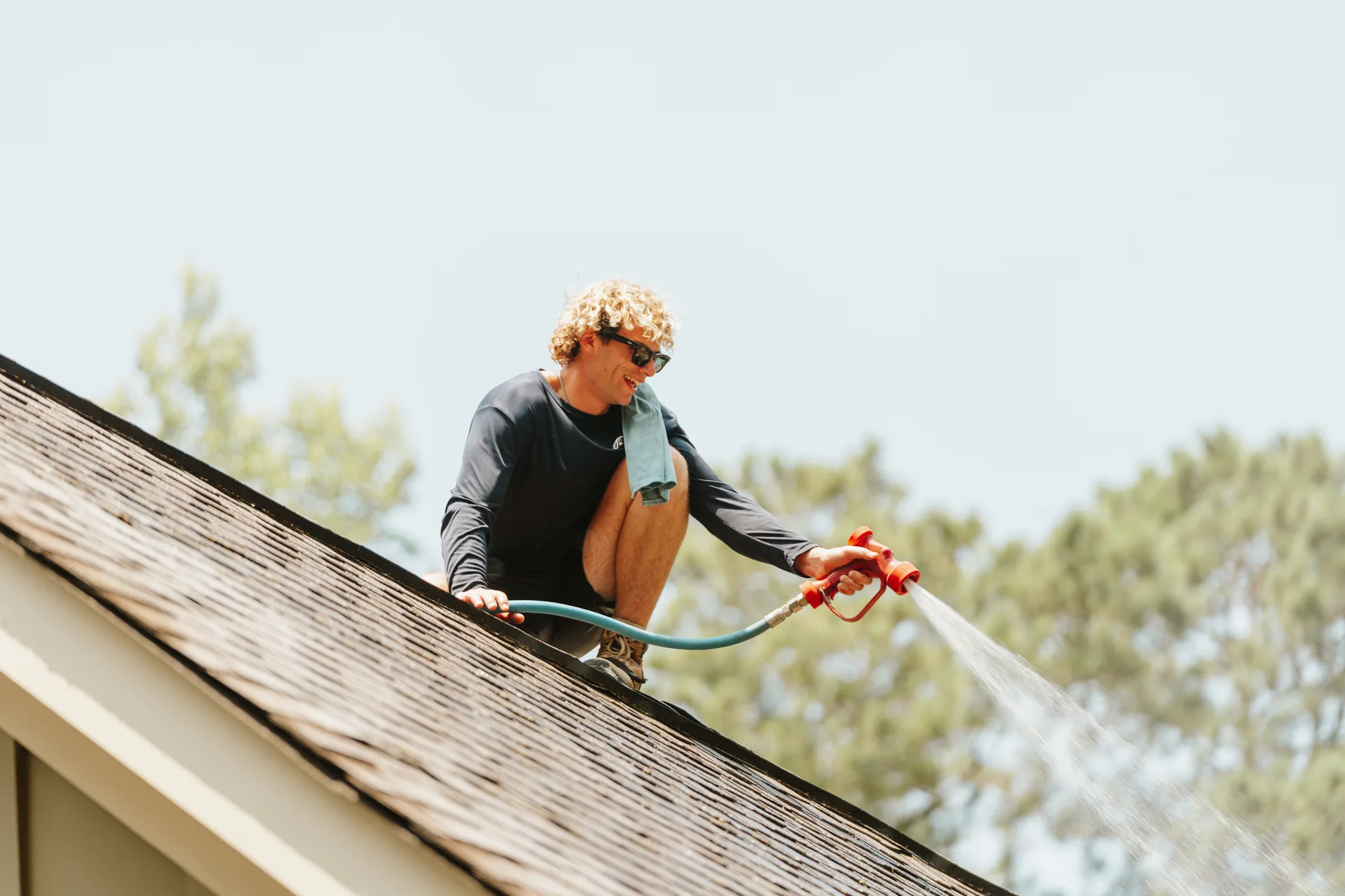
This is where the difference matters most. Pressure washing a roof is one of the worst things you can do to it. High-pressure water strips the protective granules off asphalt shingles, can push water under the flashing, and can void your shingle warranty.
Soft washing is the method the Asphalt Roofing Manufacturers Association (ARMA) recommends for cleaning roofs. A cleaning solution kills the algae, moss and lichen, then a gentle rinse clears it off without touching the granules. Those black streaks on so many Georgia roofs are algae, and we explain what causes black streaks and how they come off safely.
On our roof cleaning jobs, we never put a pressure wand on your shingles.
5. Soft wash vs pressure wash, side by side
Here’s the quick version:
- How it cleans: Soft washing uses a cleaning solution and low pressure. Pressure washing uses the force of the water.
- Best for: Soft washing is for siding, stucco, painted wood and roofs. Pressure washing is for concrete and other hard surfaces.
- Algae and mildew: Soft washing kills the growth at the root. Pressure alone mostly knocks the top layer off.
- Risk of damage: Soft washing is gentle on your home. High pressure on the wrong surface can strip paint, crack trim and ruin shingles.
6. What about your plants?
This is the question we hear most about soft washing. Done right, your landscaping is protected. Before any solution goes on, we soak the plants, beds and grass around the house with water. When we’re done, we rinse them again. On roof and concrete jobs, we also use a pH-neutralizing rinse.
Here’s the full process for how we keep soft washing from hurting your plants.
7. Should you DIY it?
You can rent a pressure washer for a driveway. Just know that consumer machines often leave a patchy, striped finish on concrete, because they don’t have the steady flow of a commercial surface cleaner.
Siding and roofs are a different story. A rented pressure washer is the wrong tool for both, and climbing on a roof is risky. If your house or roof has green or black stains, that’s a soft wash job. For the driveway and walkways, see our concrete cleaning service.
Frequently asked questions
Is soft washing better than pressure washing?
Neither is better everywhere. Soft washing is better for siding, stucco, painted wood and roofs. Pressure washing is better for concrete. A good company uses the right method for each surface.
Is soft washing more expensive than pressure washing?
It depends on your home’s size and what needs cleaning, not just the method. Most homes need some of each, so we quote the whole job at once.
Does soft washing last longer?
On siding and roofs, usually yes. Killing the algae and mildew at the root keeps the stains from coming right back. Most homes do well with a house wash every 1 to 2 years and a roof cleaning every 2 to 3 years, more often under heavy shade.
Get the right clean for every surface
We soft wash homes and roofs and pressure wash driveways all around Athens, Watkinsville, Bogart, Bishop and Jefferson. Send us your address and we’ll send you a straight number.