You can, but you shouldn’t. A pressure washer can break the seals on double-pane windows, push water past the frame and tear your screens, and it usually leaves the glass spotty anyway. A low-pressure rinse with pure water, or a bucket and a squeegee, does a better job with none of the risk.
Here’s what can go wrong, when a little pressure is fine, and how to get clean, streak-free glass instead.
1. What a pressure washer does to windows
Windows look tough, but the glass is the strongest part. The weak spots are everything around it.
- Broken seals. Most newer homes have double-pane windows. A rubber seal holds the two panes together. A hard spray can loosen that seal, and once it fails, moisture gets between the panes. That’s the foggy, cloudy look you can’t wipe off, because it’s on the inside.
- Water inside the wall. Window frames have caulk around the edges and small weep holes at the bottom that let rain drain out. High pressure can blow water backward through those gaps and into the wall or onto your windowsill inside.
- Torn screens. Window screen mesh is thin. A close spray can stretch it, tear it or pop the screen out of its frame.
- Old glass and glazing. Older homes, which you see all over Athens, often have single-pane windows held in with glazing putty. Pressure can chip that putty out and, in the worst case, crack an old pane.
2. Pressure washing doesn’t even get windows clean
Even if nothing breaks, a pressure washer is the wrong tool for glass. Here’s why:
- It leaves spots. Hose and well water has minerals in it. When that water dries on glass, the minerals stay behind as white spots. Blast the window and let it air dry, and you’ve traded dirt for water spots.
- It doesn’t break the film. The haze on Georgia windows is mostly pollen, dust and grime from summer storms. It sticks. Water alone knocks off the loose dirt but leaves a thin film you see as soon as the sun hits it.
- It misses the frames and tracks. Dirt in the tracks and on the sills just gets pushed around, then runs back down the glass.
3. When a little pressure is okay
There’s a difference between a high-pressure blast and a gentle rinse. When a house gets soft washed, the siding is cleaned with a low-pressure spray and a cleaning solution, so the windows next to it get a gentle rinse too. That’s fine. It’s the close-up, high-pressure spray aimed right at the glass and frames that does the damage.
If you do use a pressure washer near your windows, keep it simple:
- Use the widest, lowest-pressure tip.
- Stand well back and never spray straight into the edges of the frame.
- Take the screens out first and clean them by hand.
- Never spray up under the window, where water can get behind the trim.
Want to know which surfaces can take pressure and which can’t? We break it down in soft wash vs pressure wash.
4. The better way to clean outside windows
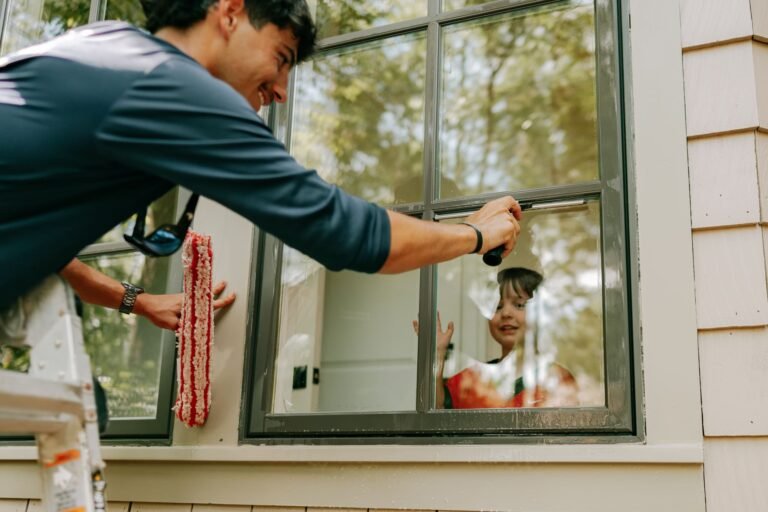
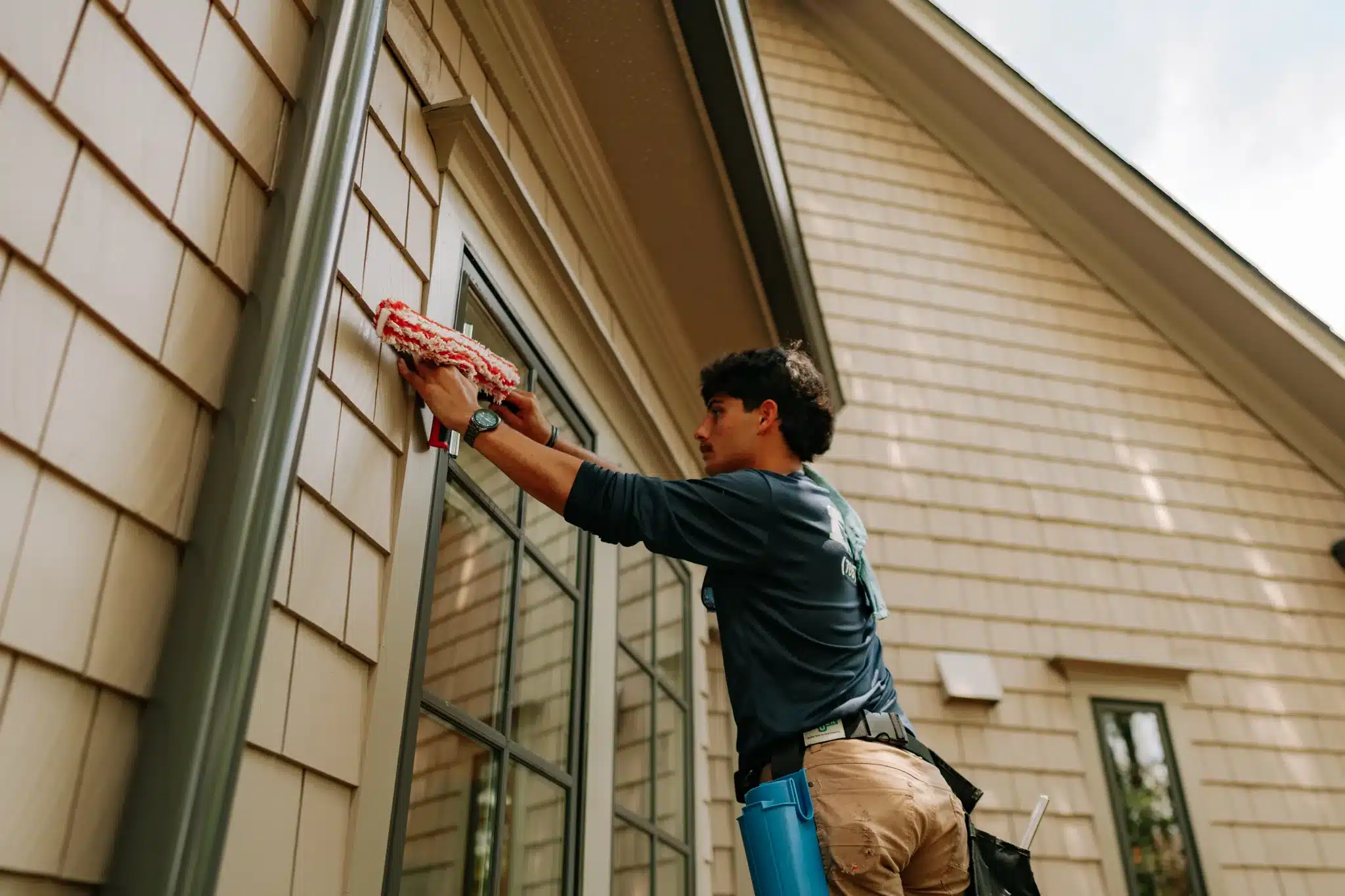
For windows you can reach: use a bucket of water with a few drops of dish soap, a soft scrubber or sponge, and a squeegee. Scrub the glass, then pull the water off with the squeegee from top to bottom, wiping the blade after each pass. Dry the edges with a lint-free cloth. Clean on a cloudy day if you can, since full sun dries the soap before you can squeegee it off.
For screens: take them out, lay them flat, and wash them with soapy water and a soft brush. Rinse gently with a hose, not a pressure washer, and let them dry before you put them back.
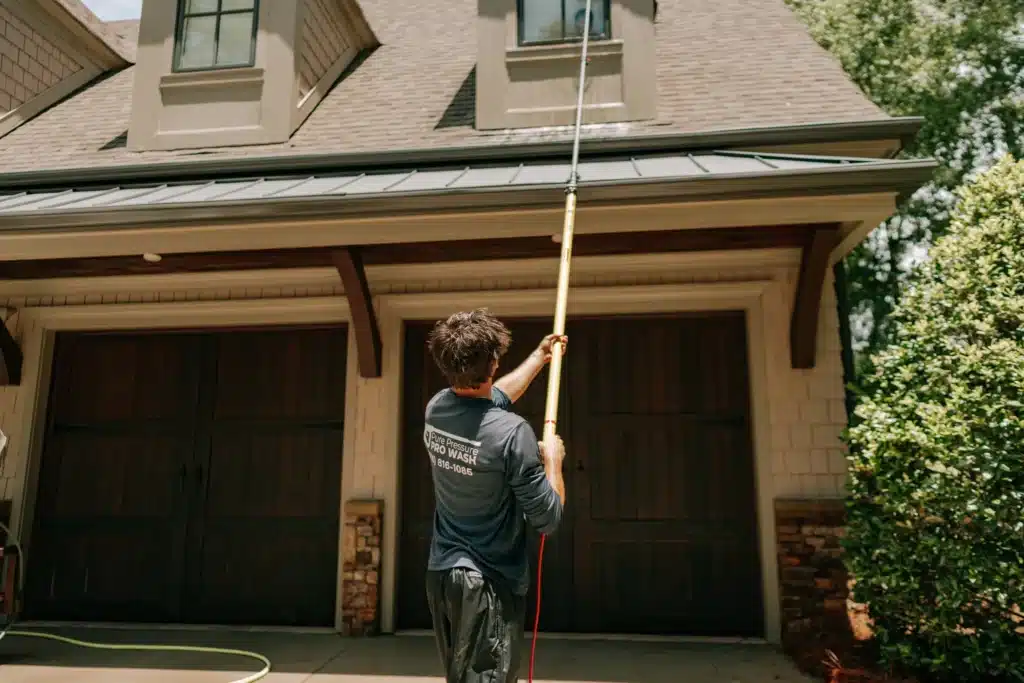
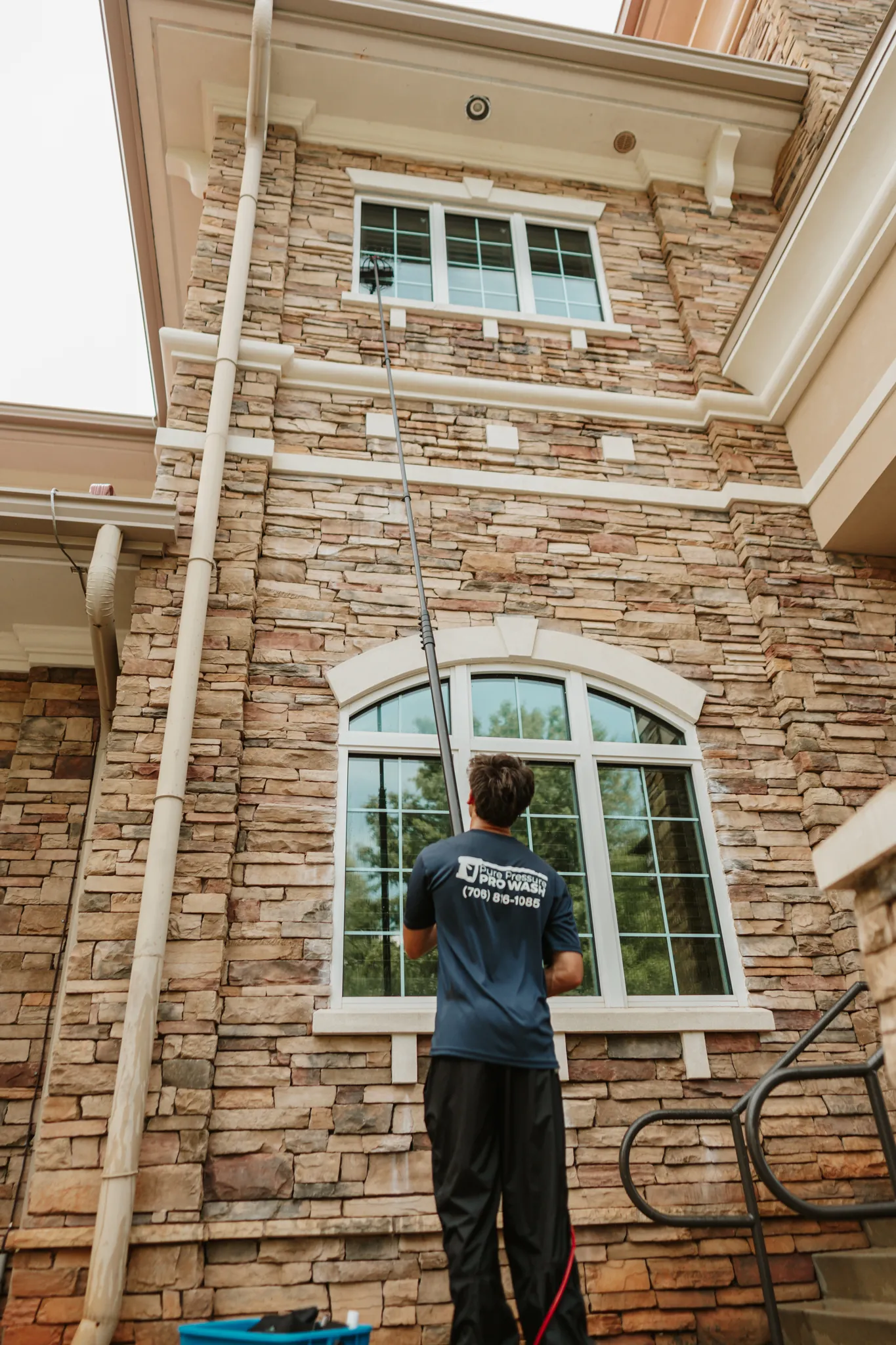
For second-story windows: this is where most people reach for the pressure washer, because they can’t get up there. Climbing a tall ladder with a bucket is risky, and spraying from the ground is how seals get broken. This is the job professionals use a water-fed pole for.
5. How we clean windows without a pressure washer
Our window cleaning in Athens uses a deionized, water-fed pole system. Deionized water is pure water with every mineral taken out. A soft brush on the end of the pole scrubs the glass, the pure water rinses the dirt away, and it dries clean on its own. No streaks, no residue, no spots, and no high pressure anywhere near your seals.
The pole lets us reach second-story glass from the ground. Where it can’t reach, like screened porches and sunrooms, we scrub by hand and squeegee every pane. We also clean the tracks and wipe down the sills, the parts most people skip. Screen cleaning is done by hand with soft brushes on both sides, so the mesh stays in one piece.
Frequently asked questions
Can you pressure wash window screens?
It’s not a good idea. The mesh is thin and can stretch or tear. Take the screens out and wash them with soapy water and a soft brush, then rinse with a regular hose.
Will pressure washing my house damage the windows?
It can if high pressure is aimed at the glass and frames. That’s one reason houses should be soft washed instead. Our house washing uses low pressure and a cleaning solution, so siding and windows aren’t blasted.
How often should outside windows be cleaned?
Most Athens homeowners clean their windows twice a year or every quarter. Spring pollen and summer storms leave a film on the glass fast, so many people book once after pollen season and again in the fall.
Get clear windows without the risk
We clean exterior windows, screens and tracks all around Athens, Watkinsville, Bogart, Bishop and Jefferson. Send us your address and window count, and we’ll send you a straight number.