

Yes, you should clean a deck before you stain it, but you don’t need high pressure to do it. Stain only soaks into clean, bare wood, so dirt, mildew and old flaking stain have to come off first. The safe way is a wood cleaner and low pressure, then a few dry days before the stain goes on.
That’s the short answer. Here’s why cleaning matters, where people go wrong with a pressure washer, and how to tell when your deck is ready for stain.
1. Why you have to clean a deck before staining
Stain is meant to soak into the wood. Anything sitting on top of the boards gets in the way. That includes dirt, pollen, leaf stains, and the green or black film of algae and mildew that shows up on almost every deck in Georgia.
If you stain over that, two things happen. The stain sits on the dirt instead of the wood, so it peels or wears off fast. And mildew left under the stain can keep growing, so dark spots show back up through your fresh coat.
Our part of Georgia makes this worse. Heat, humidity and shade from big trees let algae and mildew grow on decks faster than most people expect. Leaves that sit on the boards through fall leave tannin stains, and red clay works its way into the grain. A deck can look “pretty clean” from the kitchen window and still have a layer that will block stain.
2. Where pressure washers go wrong
Here’s the catch. A pressure washer can do more harm than good on wood if it’s used the wrong way.
Too much pressure on wood decking raises the grain, splinters the board edges and drives water deep into the wood. That leaves a fuzzy, rough surface that soaks up stain unevenly and can look blotchy. On composite decking, high pressure can scratch the surface coating and may void the maker’s warranty.
The most common DIY mistakes:
- Using a narrow tip. A tight, zero-degree stream can cut lines right into soft wood.
- Getting too close. A few inches from the board is too close for wood.
- Using only water. Plain water at high pressure knocks off the top layer, but the mildew in the grain stays alive.
- Stopping in one spot. Holding the wand still leaves marks. Keep it moving with the grain.

3. How to clean a deck the right way before staining
The cleaner does most of the work, not the pressure. Here’s the basic order:
- Clear the deck. Move furniture, grills and planters. Sweep off leaves and pine straw, and clean out the gaps between boards.
- Protect your plants. Wet down shrubs and flower beds around the deck before any cleaner goes on, and rinse them again after.
- Apply a wood cleaner. Use a cleaner made for decks and let it sit so it can loosen dirt and kill mildew.
- Rinse at low pressure. Use a wide tip, keep your distance, and work with the grain from one end of the board to the other.
- Don’t forget the rails and stairs. Railings, spindles and stair treads collect just as much growth as the floor.
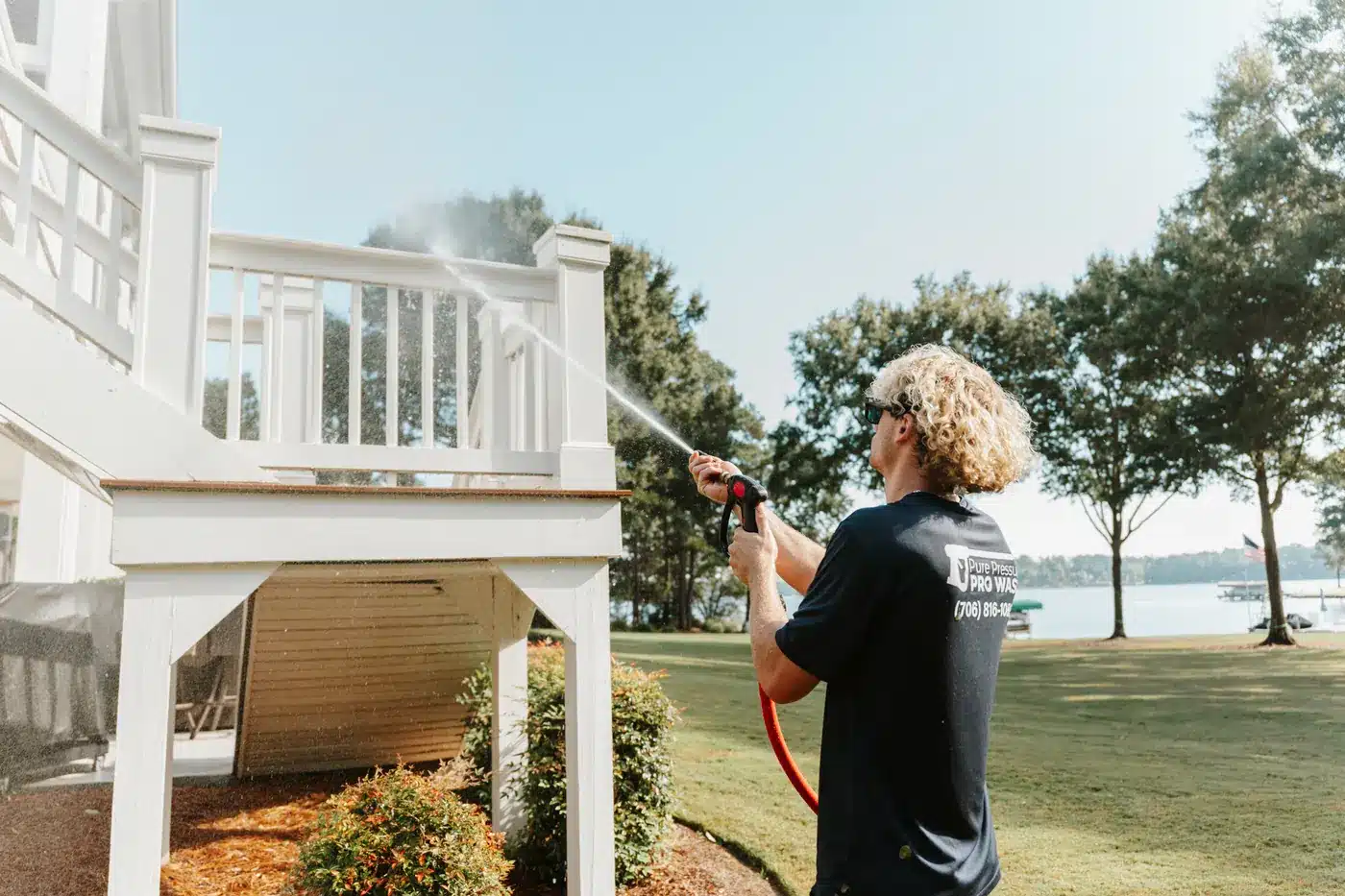
This is how we handle deck cleaning at Lake Oconee and in Athens. Wood decks get a specialized wood cleaner and carefully controlled, lower pressure. Composite decks get a soft wash with cleaning solutions that are safe for the surface. The plants and lawn around the deck stay protected the whole time.
4. How long to wait after washing before you stain
Wood has to be dry before stain will soak in. After washing, give the deck at least a couple of warm, dry days. Many stain makers say about 48 hours, and longer in cool or humid weather or if the deck sits in shade. Always go by the directions on your stain can.
To check, try the water drop test. Sprinkle a little water on a few boards, including one in the shade:
- If the water beads up, the wood isn’t ready. Give it more time.
- If the water soaks in within a few minutes, the wood is dry and open enough to take stain.
Don’t wait too long, either. A clean deck left for weeks will start collecting pollen, leaves and dirt again. Plan your stain for the first good dry stretch after the wash.
5. Do you need to sand too?
Not always. Cleaning removes dirt, mildew and loose stain. Sanding smooths the surface. If the boards feel smooth after they dry, you can usually go straight to stain.
If you feel raised, fuzzy fibers or splinters, a light sanding before staining helps the stain go on evenly. That fuzz is often a sign the deck was washed with too much pressure, which is one more reason to keep the pressure low from the start.
6. What about a brand-new deck?
A new pressure-treated deck is often still wet from the treatment, so it may not take stain right away. Use the same water drop test, and check what your builder or stain maker recommends. When it’s ready, a light cleaning first removes dirt and mill glaze from the surface so the stain can soak in.
7. The rest of the backyard
If you’re getting the deck ready, it’s a good time to look at the rest of the yard too. Wood fences pick up the same green growth and need the same gentle approach before staining. See our fence cleaning service for that. Patios and pool areas made of concrete get a surface cleaner instead. And if you’re on the water, here’s why fall is a good time to clean your dock.
Worried about your flower beds? Here’s how we keep cleaning solutions from hurting your plants.
Frequently asked questions
Can you pressure wash a deck and stain it the same day?
No. The wood needs to dry first, usually at least a couple of dry days. Stain on wet wood won’t soak in and can peel.
Should you sand or pressure wash a deck before staining?
Clean it first, every time. Sand only if the dry boards feel rough or fuzzy.
Can you pressure wash a deck with just water?
You can rinse it, but water alone won’t kill the mildew in the grain. A wood cleaner does that, and lets you use much less pressure.
Get your deck clean and ready for stain
We clean wood and composite decks at Lake Oconee, Greensboro, Eatonton and Madison, and around Athens too. Send us your address and we’ll send you a straight number.